Anson County Clerk of Superior Court
North Carolina uses a Clerk of Superior Court for court files. Anson County does not use a separate county clerk or district clerk structure for trial-court records. The Clerk of Superior Court is a constitutional judicial official who serves as court record custodian, manager of courthouse case files, and judge of probate for estates and many special proceedings. The office is located at the Anson County Courthouse, where Superior Court, District Court, public terminals, court copies, estates, traffic matters, criminal files, civil filings, and clerk questions are routed.
Anson County Clerk of Superior Court
Anson County Courthouse
114 N Greene St
Wadesboro, NC 28170
Mailing: PO Box 1064, Wadesboro, NC 28170
704-994-3800
Monday through Friday, 8:30 AM to 5:00 PM
The North Carolina Judicial Branch Anson County page links local court dates, calendars, courthouse information, programs, and eCourts services for the county.
Anson County Court Record Custodian
The Clerk of Superior Court keeps the court records, dockets, indexes, and papers for Anson County trial court actions and proceedings. N.C. Gen. Stat. 7A-109 is the clerk record statute cited in the research. For a public case, a user may begin online in eCourts Portal. For a certified record, older paper file, paper copy, or a file not visible online, the clerk's office is the official local access point.
Court records can include criminal case files, civil pleadings, traffic case records, divorce files, family filings, small claims appeals, estate records, guardianships, special proceedings, judgments, orders, motions, notices, costs, and Register of Actions entries. Public access is broad, but not unlimited. Juvenile records, sealed or expunged files, adoption records, special proceeding confidential commitments, protected victim details, and some domestic violence or child-related material can be restricted or redacted.
The Judicial Branch court-records help page explains how public terminals, paper files, and court copies work in North Carolina counties.
Anson County Public Terminals
The Judicial Branch says criminal case information can be accessed at public self-service terminals in clerk offices by defendant name, case number, victim name, or witness name. For Anson County, that means the courthouse clerk office is the fallback when eCourts Portal does not return the needed case or when a user needs to check an older or paper-based file. Terminal access is especially useful when a name is common, spelling is uncertain, or a case is not easy to confirm through a broad online search.
| Access channel | Best use | Limits |
|---|---|---|
| eCourts Portal | Public online case search, court dates, payments, Register of Actions | Not a certified official copy source. |
| Public terminal | Courthouse searches by name, case number, victim, or witness | Requires in-person courthouse access. |
| Paper file request | Older files, full case review, documents not online | Access depends on public-record and confidentiality rules. |
| Certified copy request | Official court copies for legal use | Fees and processing should be verified with the clerk. |
The North Carolina eCourts Portal is the online starting point for public case searches and payments in eCourts counties.
Request Anson County Certified Copies
A certified court copy is the clerk-issued version used when a person needs official proof of a judgment, order, divorce decree, estate letter, disposition, or other court document. Portal screens and unofficial printouts may help identify a case, but they do not replace a certified copy from the Clerk of Superior Court. The request should identify the case, the document needed, the number of copies, and whether certification is required.
- Search eCourts Portal or a public terminal to identify the case number and party names.
- Confirm that the case is an Anson County court file, not a Register of Deeds, sheriff, or federal record.
- Contact or visit the Clerk of Superior Court with the document name and copy need.
- Ask whether plain copies, certified copies, or exemplified copies are available for that record.
- Pay the required copy or certification fee after the clerk confirms the amount and payment method.
| Request field | Required | Why it matters |
|---|---|---|
| Case number | Helpful | Best way to avoid wrong-name matches. |
| Party names | Yes | Needed if the case number is unknown. |
| Record type | Yes | Judgment, order, disposition, divorce decree, letters, or other document. |
| Copy type | Yes | Plain copy and certified copy serve different purposes. |
| Contact and delivery method | Yes | Needed for pickup, mail, or follow-up questions. |
Anson County Clerk Probate Role
The Clerk of Superior Court is also the probate officer for Anson County. Estates, wills, letters testamentary, letters of administration, small estate or collection by affidavit matters, inventories, accountings, creditor claims, guardianships, and many special proceedings are handled through the clerk. There is no separate county probate court. The page for Anson County probate records covers estate search fields and the probate workflow in more detail.
Probate records can be searched through eCourts where public case data is available, but official estate files and certified probate copies come from the clerk. Guardianship and some special proceeding records can be partly restricted due to personal, financial, medical, minor, or capacity-related information. A portal result may confirm that a case exists without giving public users every document in the file.
The Judicial Branch estates page is the statewide source for estate administration, wills, and letters.
Anson County Clerk Fees
The research located the state authority for court costs and copy fees but did not locate a complete Anson-specific clerk copy fee schedule in the local materials. N.C. Gen. Stat. 7A-290 is the state copy and cost authority cited in the research. The practical rule is to verify the current amount with the Clerk of Superior Court before mailing a request or appearing with payment.
| Item | Status | Verification channel |
|---|---|---|
| Plain court copy | Specific Anson amount not located | Clerk of Superior Court |
| Certified court copy | Specific Anson amount not located | Clerk of Superior Court |
| Estate or guardianship filing | Verify by case type | Estates Division |
| Traffic or criminal payment | Portal and clerk payoff may vary by case | eCourts Portal or clerk |
| Marriage or vital copy | Not a clerk court fee | Register of Deeds |
Note: Mail payments should follow official Judicial Branch instructions for the case type, and cash should not be mailed.
Anson County eFiling Options
Anson County is an eCourts county. The eCourts transition changed record search, filing, court dates, and payments for public users and attorneys. The Judicial Branch File & Serve page and the File & Serve provider portal support electronic filing where eFiling is required or available. Self-represented users may also use Guide & File for guided filings in available case types.
eFiling does not turn the Register of Deeds into a court office and does not make every court document public online. It is a filing channel for court cases. Public case lookup still depends on eCourts Portal and clerk access rules. Official copies, restricted records, and filings that need clerk review still depend on the Clerk of Superior Court.
Clerk vs Register of Deeds
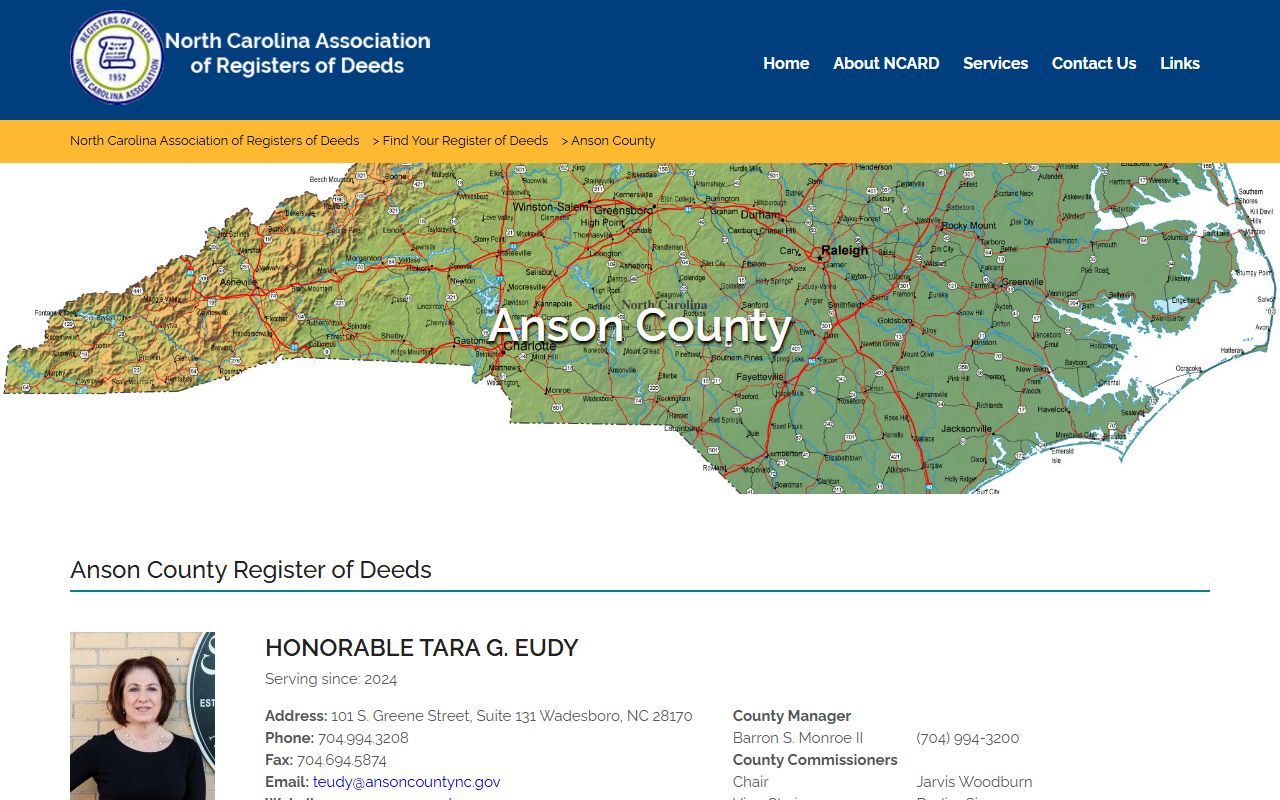
The Register of Deeds is a separate Anson County office at 101 S Greene St, Suite 131, Wadesboro, NC 28170. Tara G. Eudy is listed as Register of Deeds. That office handles marriage licenses, marriage certificates, birth records, death records, deeds, deeds of trust, plats, UCC filings, notary records, assumed names, and related county records. It does not issue divorce decrees and does not maintain Superior Court criminal case files.
| Need | Correct office | Why |
|---|---|---|
| Criminal, civil, traffic, divorce, estate, or guardianship case | Clerk of Superior Court | These are court records. |
| Certified divorce judgment | Clerk of Superior Court | A divorce decree is a court judgment. |
| Marriage license or certificate | Register of Deeds | Marriage records are vital records in Anson County. |
| Birth or death certificate | Register of Deeds | Certified vital copies have eligibility rules under state law. |
| Deed, deed of trust, plat, or land index | Register of Deeds | Land records are county records, not trial court case files. |
The NCARD Anson County Register of Deeds profile identifies Tara G. Eudy and the Register of Deeds contact details.
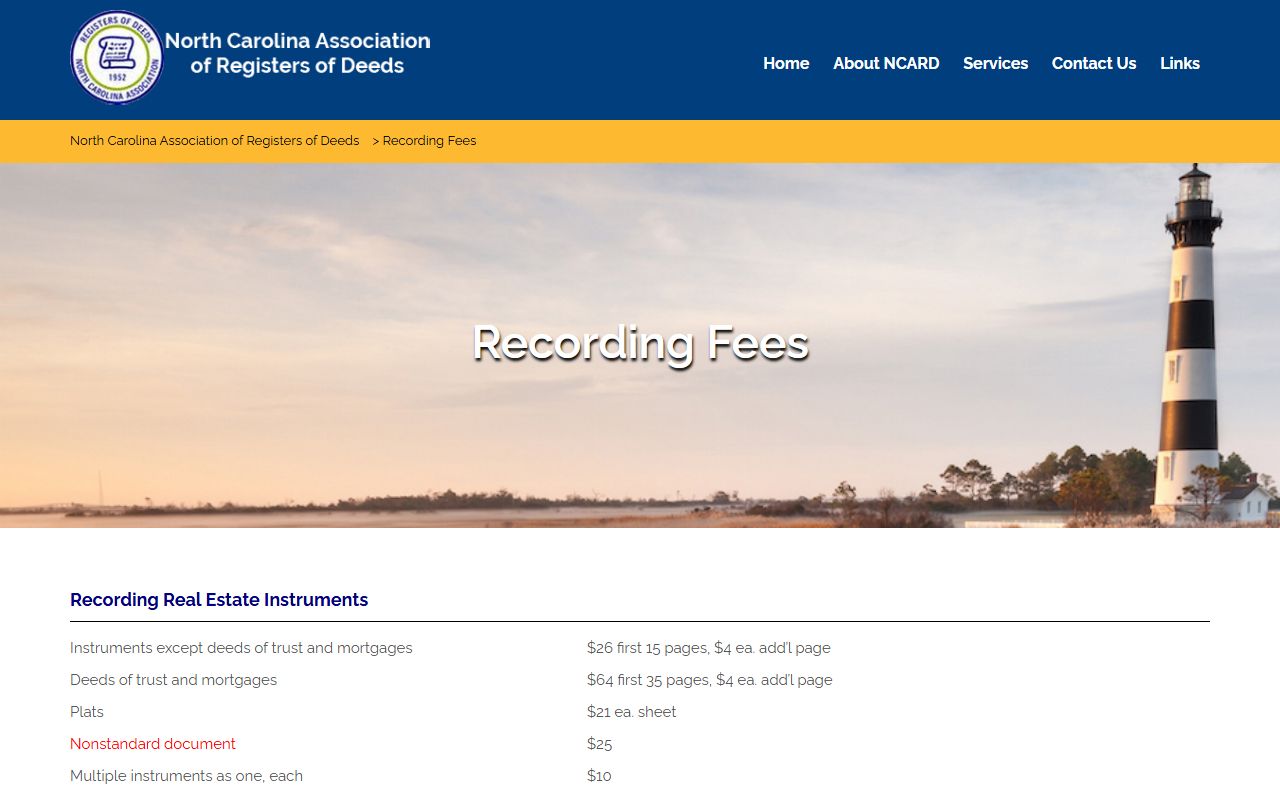
The statewide Register of Deeds recording fee page gives fee context for deed and vital-record work outside the clerk's court files.
Divorce and Vital Record Limits
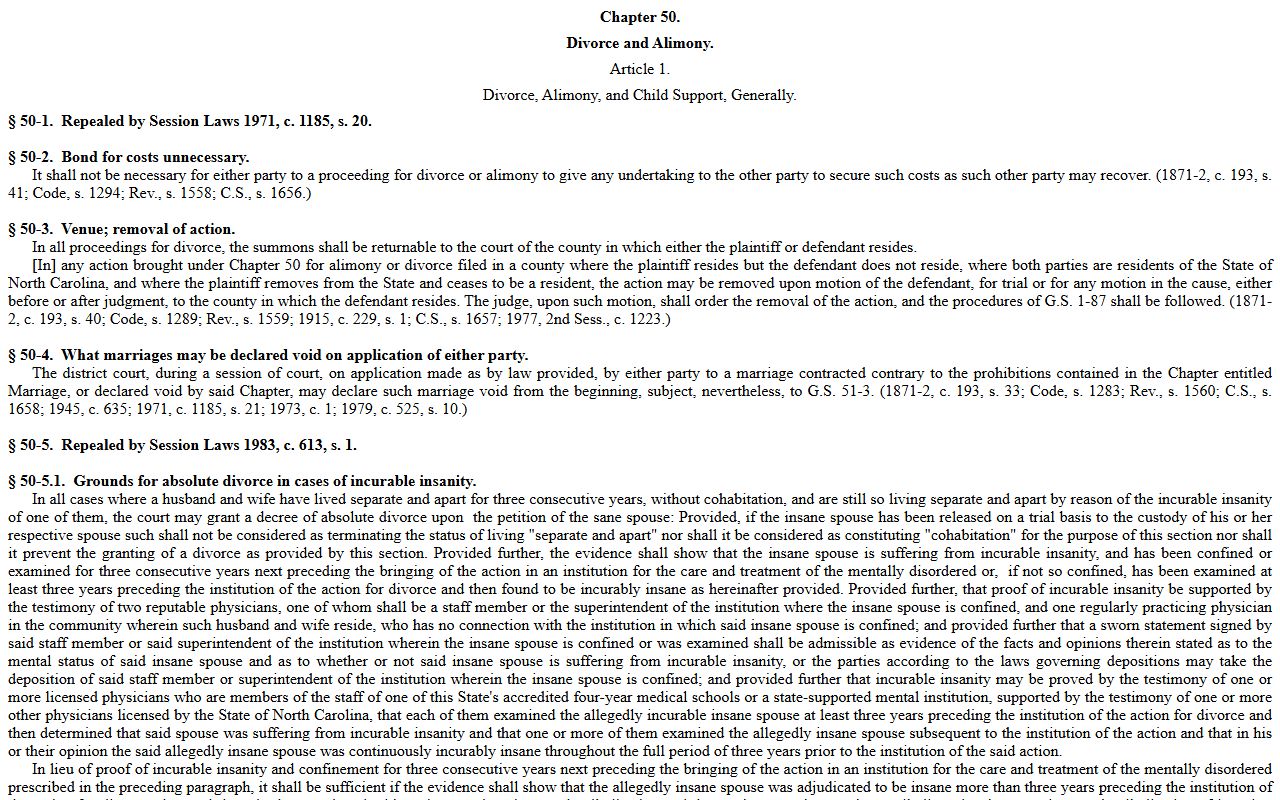
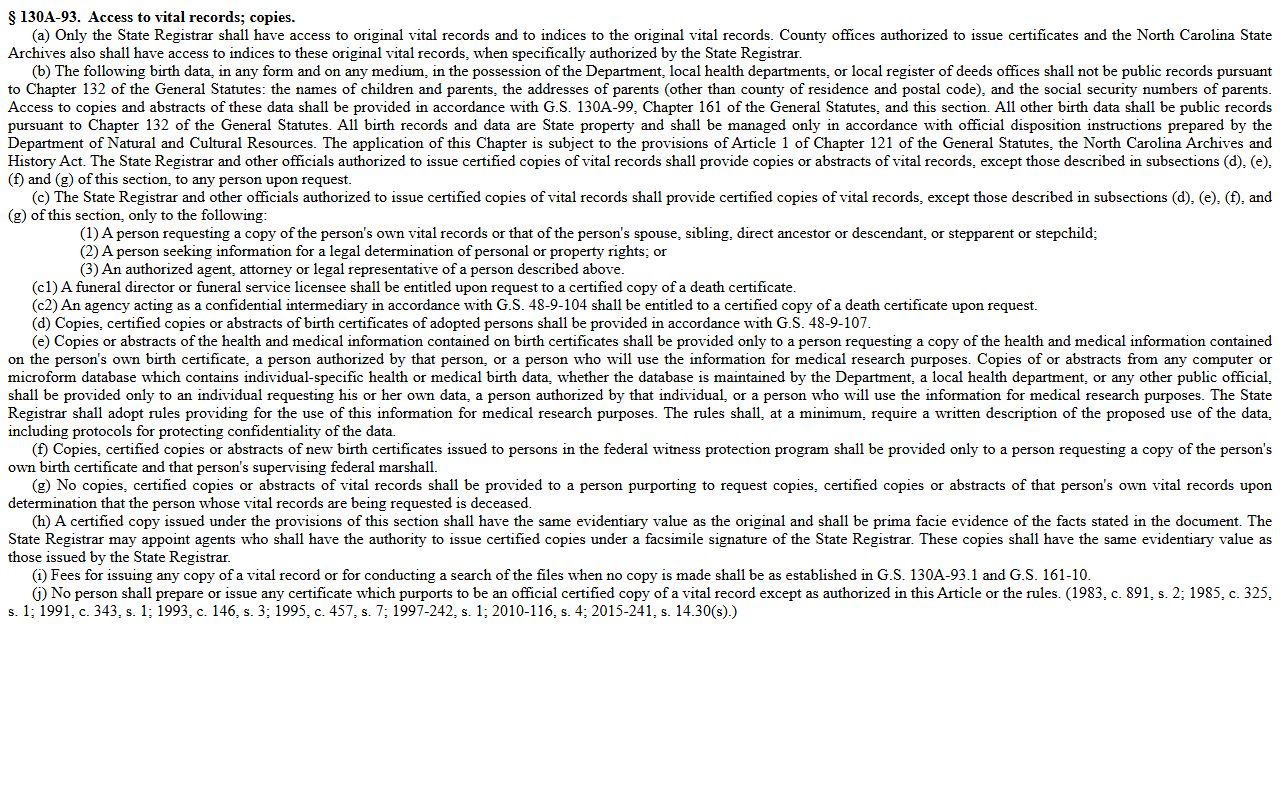
Divorce is a court record, so Anson County divorce files and certified divorce judgments route to the Clerk of Superior Court. Marriage, birth, and death certificates route to the Register of Deeds. Certified vital records are limited under N.C. Gen. Stat. 130A-93, while divorce and domestic relations filings sit under the court system and Chapter 50 for domestic relations.
The certified vital records statute explains why a person may be able to inspect or request some information but not receive a certified vital copy without eligibility.
The North Carolina divorce and domestic relations statutes provide court context for divorce records held through the clerk system.