
Anson County Criminal Court Records
A criminal court record is the case file kept by the Clerk of Superior Court after a criminal charge enters court. In Anson County, that record can include the charging document, citation, warrant or order for arrest entry, indictment or information, bond, counsel appointment, motions, plea, verdict, disposition, judgment, sentence, probation terms, costs, and appeal notices. It is the court's file, not the sheriff's booking record.
North Carolina splits criminal trial work between District Court and Superior Court. Anson County District Court handles misdemeanors, infractions, traffic offenses, initial lower-court criminal settings, and many first appearances. Anson County Superior Court handles felony criminal matters and later felony proceedings. Both sit at the Anson County Courthouse, 114 N Greene St, Wadesboro, NC 28170, and the courthouse main phone is 704-994-3800.
The full case file and final outcome live here. For the narrower arrest-to-charge path, see the Anson County arrest records and court charges page.
Search Anson Criminal Court Records
The primary online search path is the North Carolina eCourts Portal. Anson County joined eCourts on October 14, 2024, so public criminal case access is tied to statewide Portal search tools. The Portal can show public case information, hearings, Register of Actions entries, payment options for eligible matters, and documents when available and public.
Public terminals at clerk offices remain important. Judicial Branch guidance says criminal case information can be searched at public terminals by defendant name, case number, victim name, or witness name. Paper files are accessed by visiting the clerk's office in the county where the case is located. For an Anson case, use the Clerk of Superior Court at the courthouse unless the case has been transferred.
- Open eCourts Portal or start from the Anson County Judicial Branch page.
- Use Smart Search with defendant name, case number, citation number, attorney, or another known search term.
- Select Anson County and narrow by criminal case type or date range where filters are available.
- Open the case and read the Register of Actions, hearings, charges, disposition, and payment status.
- Request certified copies, older paper files, or clerk-verified records from the Clerk of Superior Court.
The manifest image for North Carolina criminal background checks supports the distinction between court-terminal searches, certified searches, and broader background-check requests.
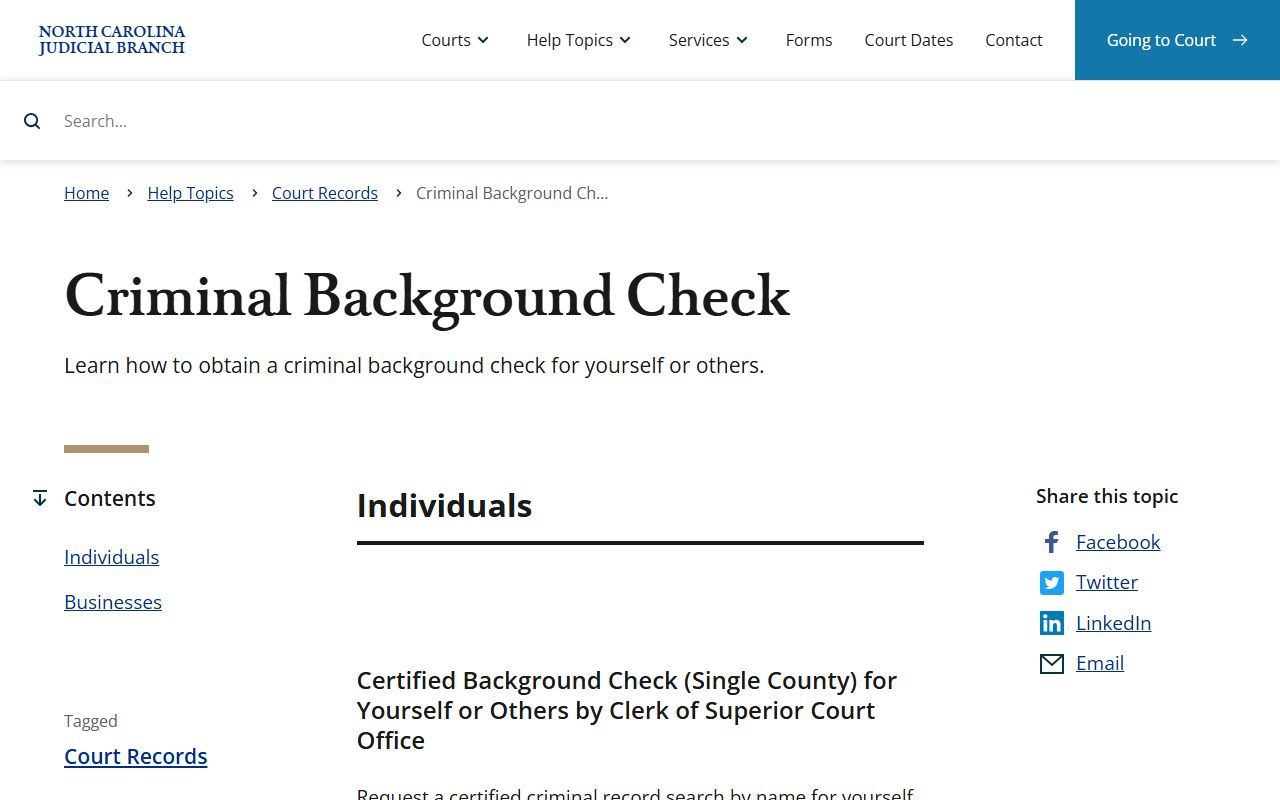
That source helps separate a public criminal case lookup from a certified criminal-record search requested through official court channels.
Anson Criminal Case Stages
A criminal court record grows as the case moves. A charge can start from a citation, warrant, indictment, information, or other charging instrument. The court record then adds hearings, counsel actions, motions, plea events, trial results, disposition, sentence, costs, and probation conditions. A single case may show several charges with different outcomes.
Case flow: Charges Filed › Arraignment › Pretrial and Motions › Plea or Trial › Disposition › Sentencing
| Stage | What appears in the court record |
|---|---|
| Charges filed | Offense description, statute, charge class, charging document, citation, warrant, indictment, or information. |
| Arraignment | Formal handling of the charge and early plea or counsel status events where docketed. |
| Pretrial and motions | Continuances, motions, orders, discovery-related filings, bond events, and court settings. |
| Plea or trial | Guilty plea, trial verdict, dismissal, amended charge, or other charge-by-charge outcome. |
| Disposition and sentence | Judgment, sentence, probation, costs, fines, restitution, appeal notices, and later compliance events. |
The manifest image for North Carolina criminal cases supports the Anson County criminal-case process summary.
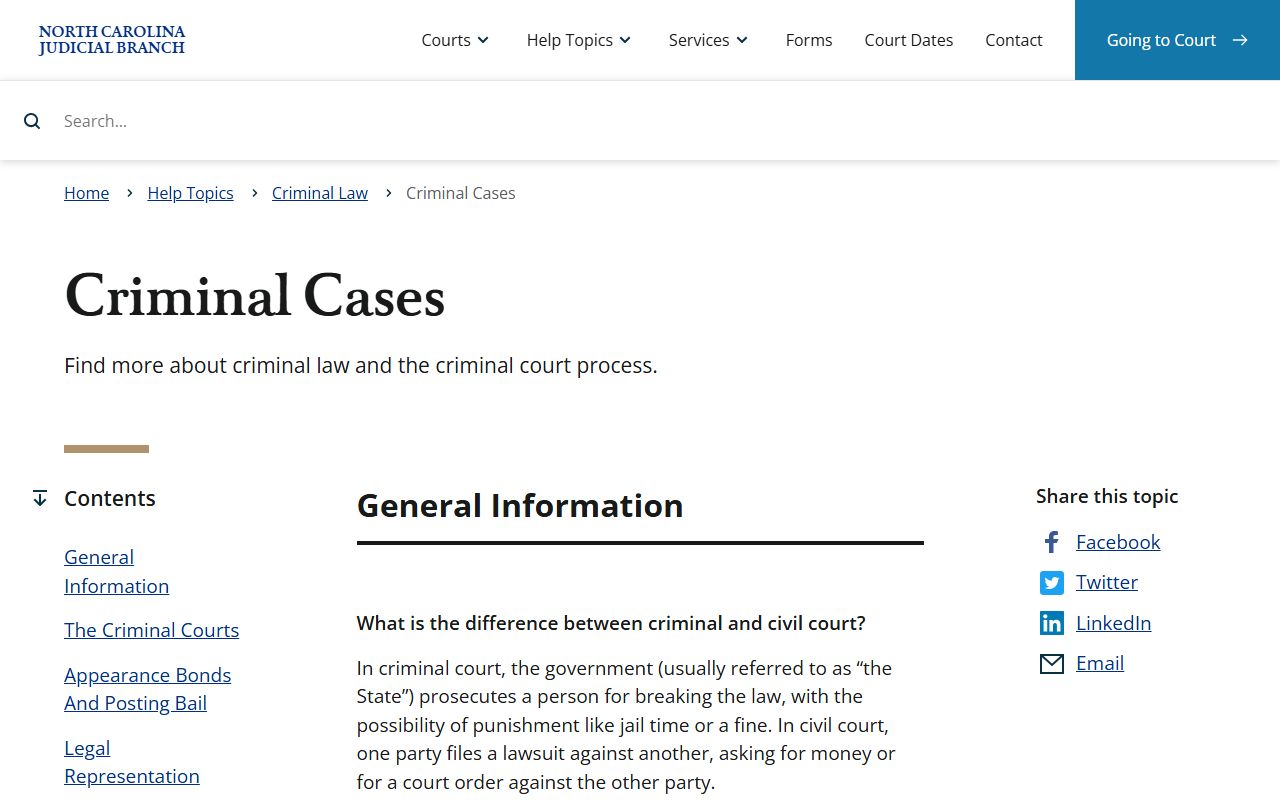
Use that source for plain-language criminal-case terms before interpreting a docket event, plea, sentence, or case status.
Anson Criminal Record Fields
Criminal case records are field-heavy. The eCourts result may show public case data, while the full paper or certified record can include more filed documents. Redactions may remove Social Security numbers, some date-of-birth details, financial account numbers, victim data, minor names, and sealed or confidential documents. Current payoff details can also depend on clerk updates.
| Field | What it shows |
|---|---|
| Case number | The court identifier used in Portal, calendars, public terminals, and copy requests. |
| Defendant | The person accused in the criminal case, with aliases only where public and tied to the case. |
| Charges | Offense description, statute, class, citation, warrant, indictment, or information details. |
| Register of Actions | The chronological docket list for public events, hearings, filings, and orders. |
| Plea or verdict | How each charge was resolved by plea, trial, dismissal, or other court action. |
| Disposition and sentence | Final or current outcome, judgment, sentence, probation, costs, fines, and related conditions. |
Charges and Convictions
A charge is not a conviction. An Anson County criminal court record may show charges that were later dismissed, reduced, amended, superseded by indictment, resolved by plea, or ended in a not-guilty result. Prosecutorial District 21 handles Anson County criminal prosecution, and the district attorney can dismiss, amend, reduce, indict, or negotiate charges as the case develops.
| Question | Charge | Conviction |
|---|---|---|
| What it means | An accusation filed in court or tied to a citation, warrant, information, or indictment. | A final guilty outcome by plea or verdict. |
| Where it appears | Early in the case record and in charge-level docket details. | Disposition, judgment, sentencing, and driver or correctional reporting where applicable. |
| Can it change? | Yes. Charges can be amended, reduced, dismissed, or replaced. | Only changed through later court action, appeal, post-conviction relief, or eligible expunction. |
Anson Criminal Case Parties
The State is the prosecuting party in North Carolina criminal cases. Anson County is in Prosecutorial District 21, and the research notes that Jamie Adams was appointed district attorney for Anson, Richmond, and Scotland counties in September 2024. Current office contact details should be checked through the North Carolina district attorney resources before relying on a directory entry.
Defense representation may be private counsel or appointed counsel through North Carolina Indigent Defense Services procedures. If an Anson defendant is seeking appointed counsel, the court appointment process controls. The North Carolina Indigent Defense Services and statewide defender directories are better sources than assuming a separate local public defender office exists.
The manifest image for North Carolina district attorney resources supports the prosecution-role discussion for Anson County criminal court records.

District attorney actions can explain why a charge changes between arrest, first appearance, indictment, plea, and final disposition.
Anson Sealed Expunged Records
Sealed and expunged records are not the same. A sealed record is restricted from ordinary public view under a statute or court order. An expunction is a legal process that removes eligible records from public access after an order is processed. Dismissals and not-guilty outcomes may be handled under G.S. 15A-146, but other expunction categories have different rules, waiting periods, fees, and eligibility limits.
| Issue | Sealed record | Expunged record |
|---|---|---|
| Public visibility | Hidden or limited according to the sealing law or order. | Removed from ordinary public court and law-enforcement indexes after processing. |
| How it happens | By statute, court order, or protected case type. | By petition, statutory eligibility, agency review, and court order. |
| Anson access point | Clerk review or court order may be needed. | File through the county where the charge or case occurred. |
The manifest images for North Carolina expunctions, G.S. 15A-145, and G.S. 15A-146 support the expunction limits discussed for Anson County criminal court records.
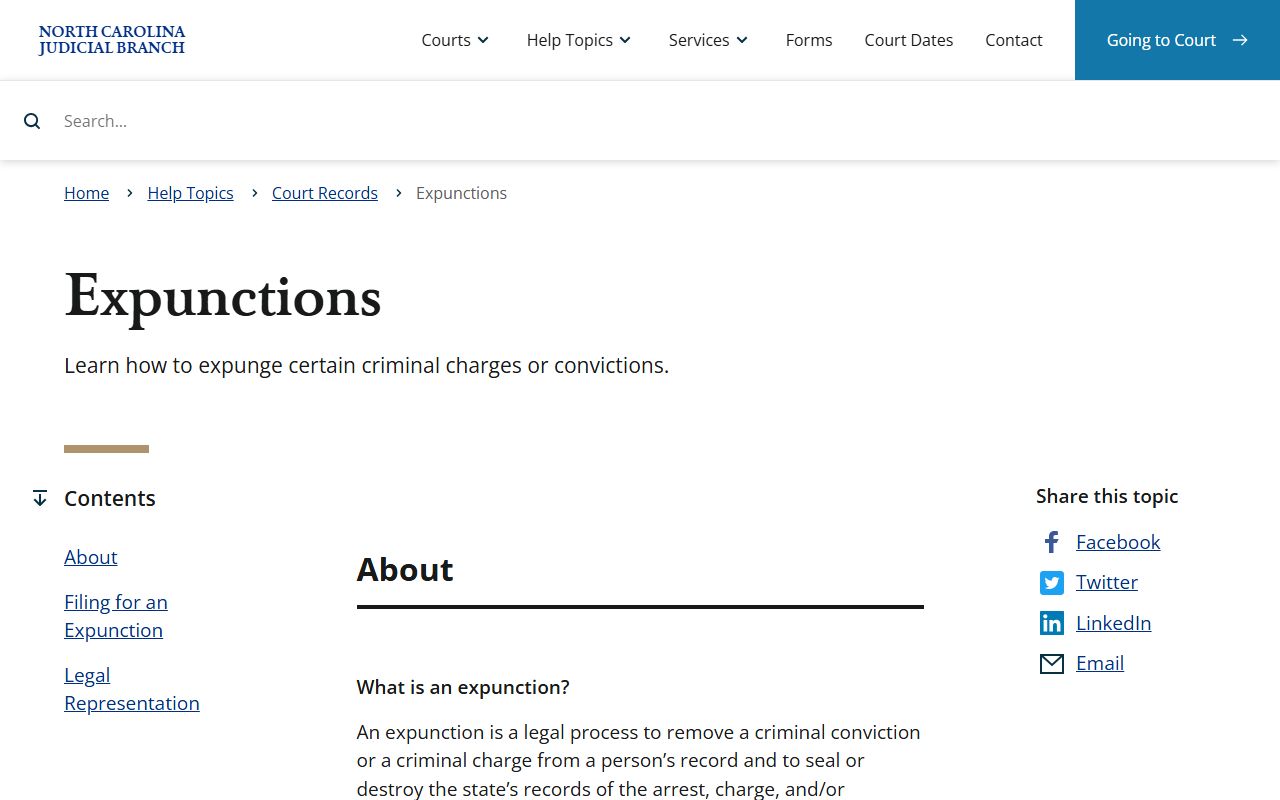
The Judicial Branch expunction source is the practical starting point for forms and eligibility before filing at the courthouse.
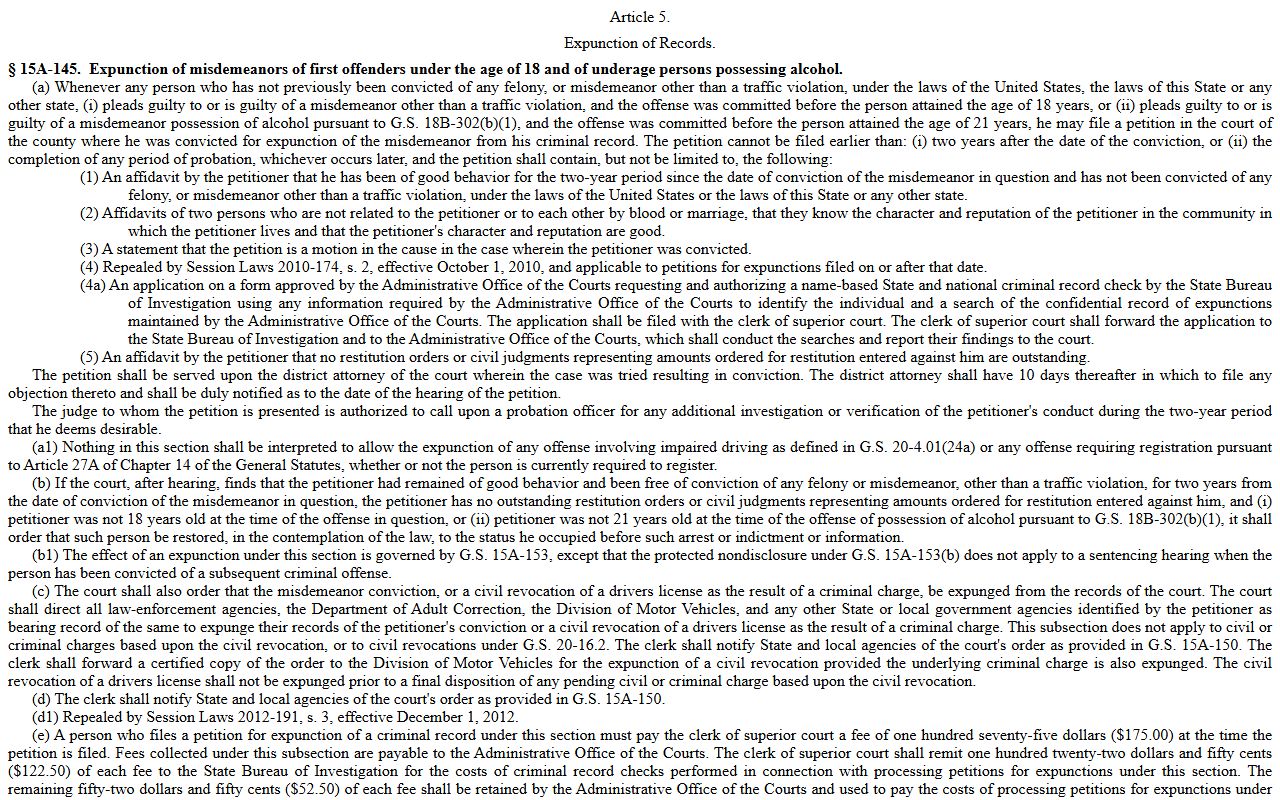
G.S. 15A-145 covers selected expunction categories and should not be treated as a rule for every criminal record.
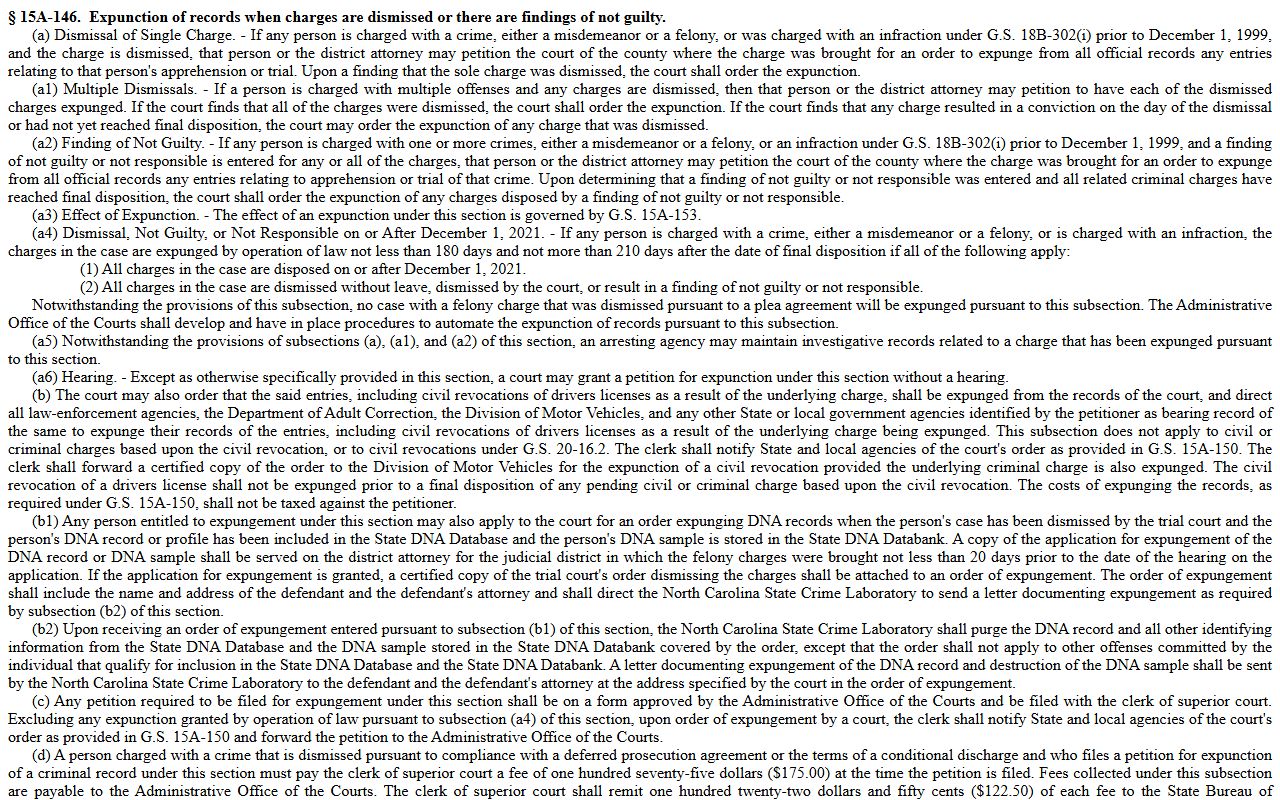
G.S. 15A-146 is especially relevant to dismissed charges and findings of not guilty, but a granted order still must be processed.
Public Anson Criminal Records
North Carolina law gives broad access to many government records, but criminal court files have court-specific limits. Chapter 132 is the state public-records framework, and G.S. 7A-109 covers clerk records, dockets, indexes, and papers. Public access does not override juvenile confidentiality, sealing orders, expunctions, protected victim information, or special restrictions.
Juvenile delinquency and child-welfare records are restricted under rules different from adult criminal files. Protective order information may also be limited in Portal. Special proceeding confidential commitment records are not broadly visible to public users. For a reliable public copy, use Portal to identify the case and then ask the Clerk of Superior Court what can be released.
Note: A public criminal case result is not a consumer report and should not be used for FCRA-covered screening.
Anson Background Check Limits
A casual court-record search is not the same as an employment, tenant, credit, or insurance background check. FCRA-regulated screening has legal requirements beyond a public court lookup. North Carolina's court resources explain public and certified criminal searches, but official certified searches and case copies should come from the proper court channel.
County jail records, state prison records, sex offender registry entries, and federal records are separate systems. An inmate may appear in Citizen Connect after arrest, a sentenced person may appear in NCDAC offender search, and a federal defendant may appear in PACER. None of those replaces the Anson County criminal court record.