
Anson County Arrest Records and Court Charges
Arrest records in Anson County describe the arrest or booking event. They may show the arresting agency, custody status, booking or admit date, and the charge description used at intake. The official Anson County Jail page links the public to Citizen Connect for booking information, so jail custody records should be treated as sheriff records rather than court judgments. They can help confirm whether a person is currently held or recently admitted, but they do not prove guilt and do not replace the court file.
Court charge records begin when a charge is filed or docketed in the court system. In Anson County, the Clerk of Superior Court at the courthouse keeps trial-court records, while the District Attorney for Prosecutorial District 21 decides which criminal charges to prosecute. A person may be arrested on one allegation and later face charges that are dismissed, reduced, superseded, or indicted. For the full case file, plea, judgment, and sentence, the criminal case record is separate from the jail booking record.
The North Carolina Indigent Defense Services site is a useful source for appointed-counsel context when charges have been filed against a defendant.
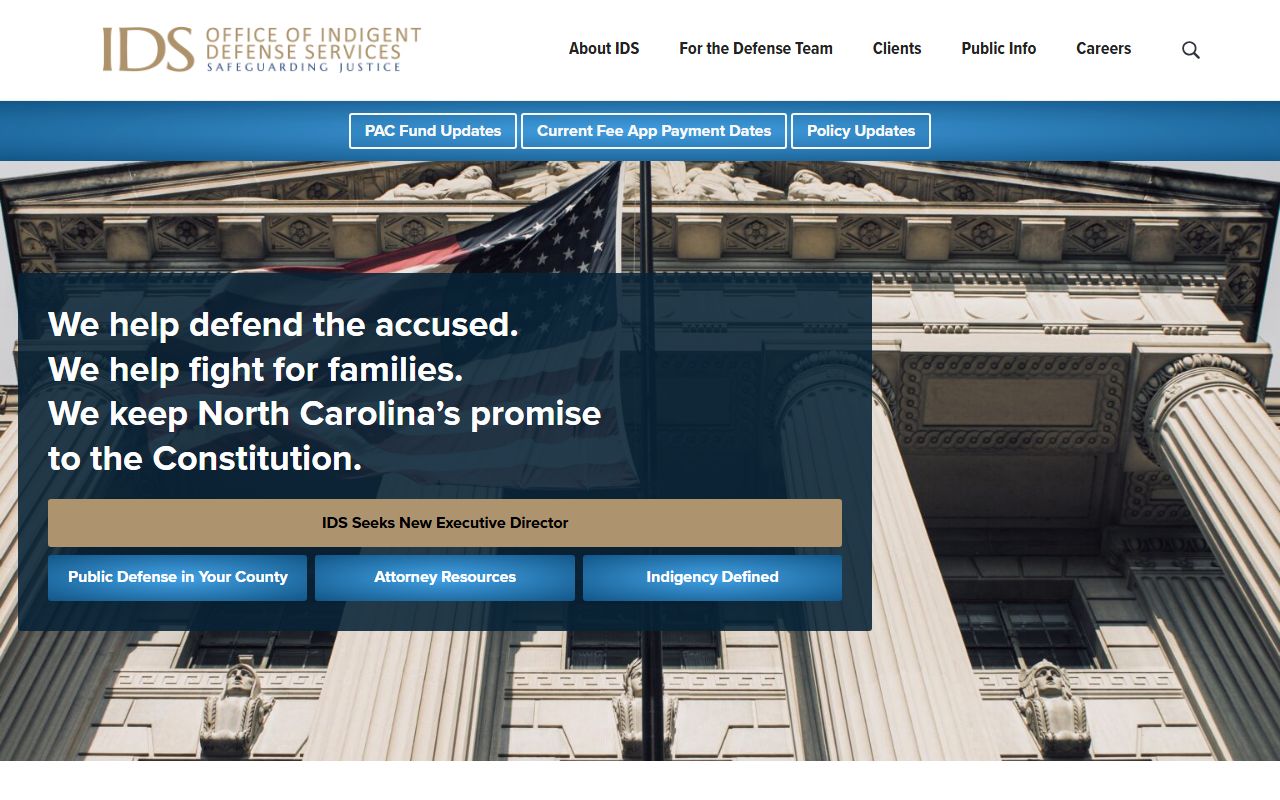
That distinction matters because defense appointment, court dates, and charge outcomes are court issues, not jail roster fields.
Find Anson County Arrest Records
Use two official tracks for Anson County arrest records and charges. For court charges after arrest, start with the North Carolina eCourts Portal and search public criminal case information by name, case number, citation number, or other available filters. For booking and current confinement, use the Anson County Sheriff's Office Citizen Connect inmate confinement search. Automated inspection of the direct Citizen Connect page hit a reCAPTCHA block, so the public page should not be described as exposing every possible field to every user.
- Open eCourts Portal and use Smart Search for a broad name, case number, citation number, or attorney search.
- Choose Anson County when a county filter is available so statewide results do not bury the local case.
- Open the case and read the charge list, court division, hearing dates, and Register of Actions.
- Check the current status of each charge because one arrest can produce several charges with different outcomes.
- Use the Clerk of Superior Court for official copies, public terminal access, paper files, and certified records.
For the custody side, Citizen Connect identifies Current Confinements, Admits by Date Range, Charges, Arresting Agency, custom start and end dates, Last 24 hours, and Last 7 days. If the booking tool does not answer the question, call the Sheriff's Office or jail rather than assuming no record exists.
The statewide defender directory helps users understand appointed-counsel channels after charges appear in court.
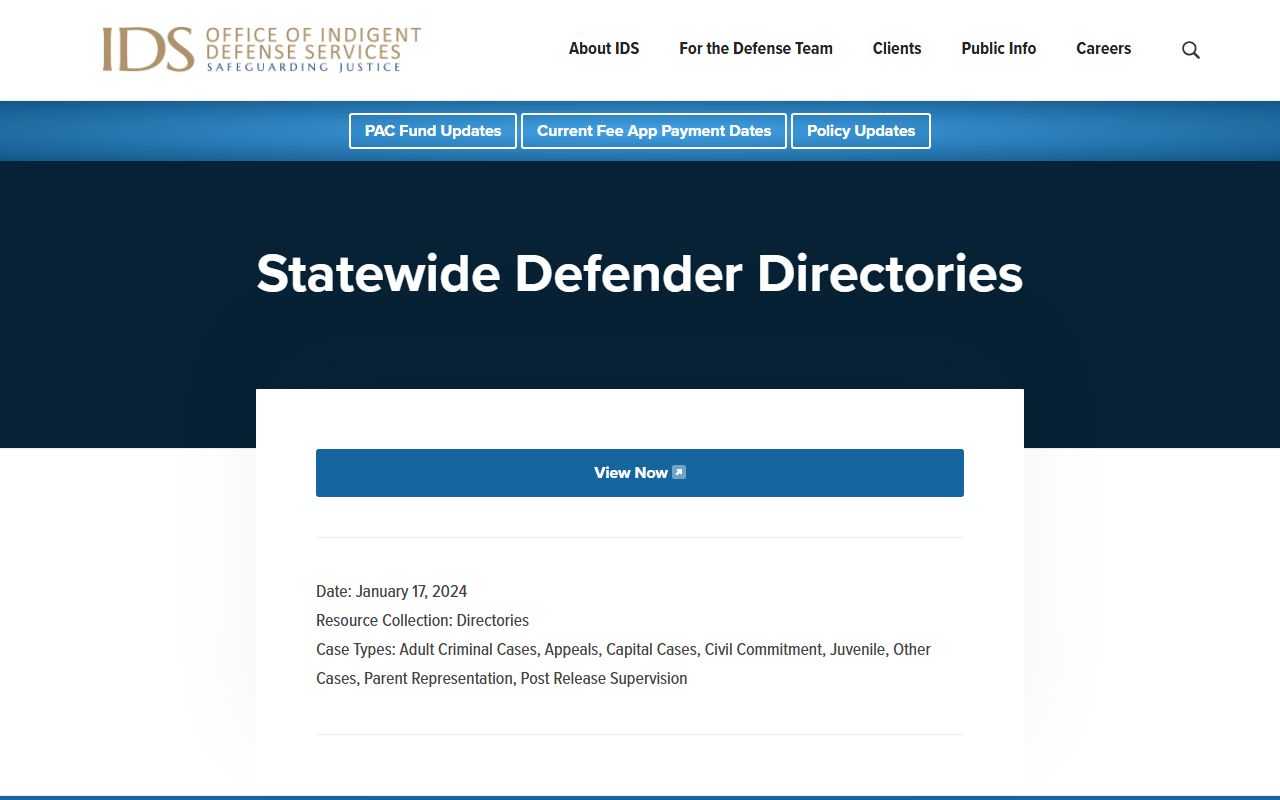
Public defender and appointed-counsel resources are separate from the charge lookup itself, but they become relevant once a case has opened.
Anson County Charges After Arrest
The charging document is the bridge between the arrest and the court case. A law-enforcement officer may arrest a person, a magistrate may issue process, and the District Attorney may decide which charges to pursue. In Anson County, felony matters can move into Superior Court, while misdemeanors and traffic-related offenses often start in District Court. The record may show the initial allegation, then later show a different prosecution path if the DA reduces, dismisses, supersedes, or indicts a charge.
| Document | Who uses it | What it means in Anson County charges |
|---|---|---|
| Complaint or citation | Officer, magistrate, or prosecutor process | Starts or supports a misdemeanor, infraction, or initial criminal accusation. |
| Information | Prosecutor | States the formal charge when a prosecutor proceeds without a grand-jury indictment where allowed. |
| Indictment | Grand jury | Formal felony accusation that can move a case into Superior Court prosecution. |
Readers should not treat the booking charge as the final court charge. Prosecutorial District 21 controls the prosecution decision, and the court file may later reflect plea talks, amended counts, dismissals, or indictment language.
Anson County users should also separate local charges from state or federal matters. A state charge tied to the Anson courthouse may show in eCourts and the Clerk of Superior Court file. A federal charge from the Middle District of North Carolina belongs in federal court records and PACER. A state prison, probation, or parole record belongs with NCDAC. These systems can involve the same person, but they answer different questions. The court charge record answers what accusation is pending or resolved in the Anson County trial court system.
The U.S. Attorney for the Middle District of North Carolina handles federal prosecutions, which are not Anson County court charges.
A federal charge belongs in federal court records, so it should not be searched only through Anson County eCourts or the local jail roster.
Anson County Charge Status
Charge status tells where an accusation stands at the time the record is viewed. A pending charge is still open. A dismissed charge ended without conviction. A reduced charge means the prosecution moved forward on a lesser offense or amended offense. A superseded or indicted charge may replace an earlier accusation in the court record. Because Portal and paper files can update after clerk action, confirm time-sensitive status with the Clerk of Superior Court.
The timing of a status update can matter. A person may be booked before the court record has a full case history. A charge may appear in District Court before later Superior Court indictment. A dismissal may appear on one count while another count remains active. For that reason, read the whole case and not just the first charge line. When a result affects bond, release, travel, work, or another court date, the Anson County courthouse is the safer verification channel.
| Status | What it means | Reader caution |
|---|---|---|
| Pending | The charge is open and no final disposition is shown. | A pending charge is not a conviction. |
| Amended or reduced | The charge changed by prosecutor action, plea, or court order. | Read the current charge and the old docket entries together. |
| Dismissed | The charge ended without conviction on that count. | Dismissal wording and expunction eligibility are separate issues. |
| Superseded or indicted | A later filing or indictment replaced the earlier charge path. | Look for the newest case number or Superior Court entry. |
| Recalled or unserved order event | A warrant or order event changed status in the Register of Actions. | Verify with the clerk or sheriff before acting on it. |
Anson County Charges vs Convictions
A charge is an accusation filed against a defendant. A conviction is a final result after a guilty plea, verdict, or other judgment that counts as guilt under the case record. Anson County court charges may be public while still pending, but they should not be described as criminal history convictions unless the case disposition supports that statement.
This distinction is central for arrest records. A booking entry can list the offense reported at intake, while the court charge can later show a different statute, class, or case number. The final criminal court record may then show dismissal, plea, verdict, sentence, probation, or expunction activity. Each stage is a record, but only the final disposition explains how the court resolved the charge.
| Point of comparison | Charge | Conviction |
|---|---|---|
| Case stage | Filed after arrest, citation, summons, or indictment. | Entered after plea, verdict, or qualifying judgment. |
| Proof level | Based on accusation and probable cause or charging authority. | Requires a final legal outcome in court. |
| Record meaning | Shows what the state alleged. | Shows what the defendant was found or admitted guilty of. |
| Possible change | May be dismissed, reduced, superseded, or expunged if eligible. | May later be appealed, modified, or eligible for limited relief. |
The North Carolina DPS public records request channel is separate from the Anson court charge record and may be useful for state agency records.
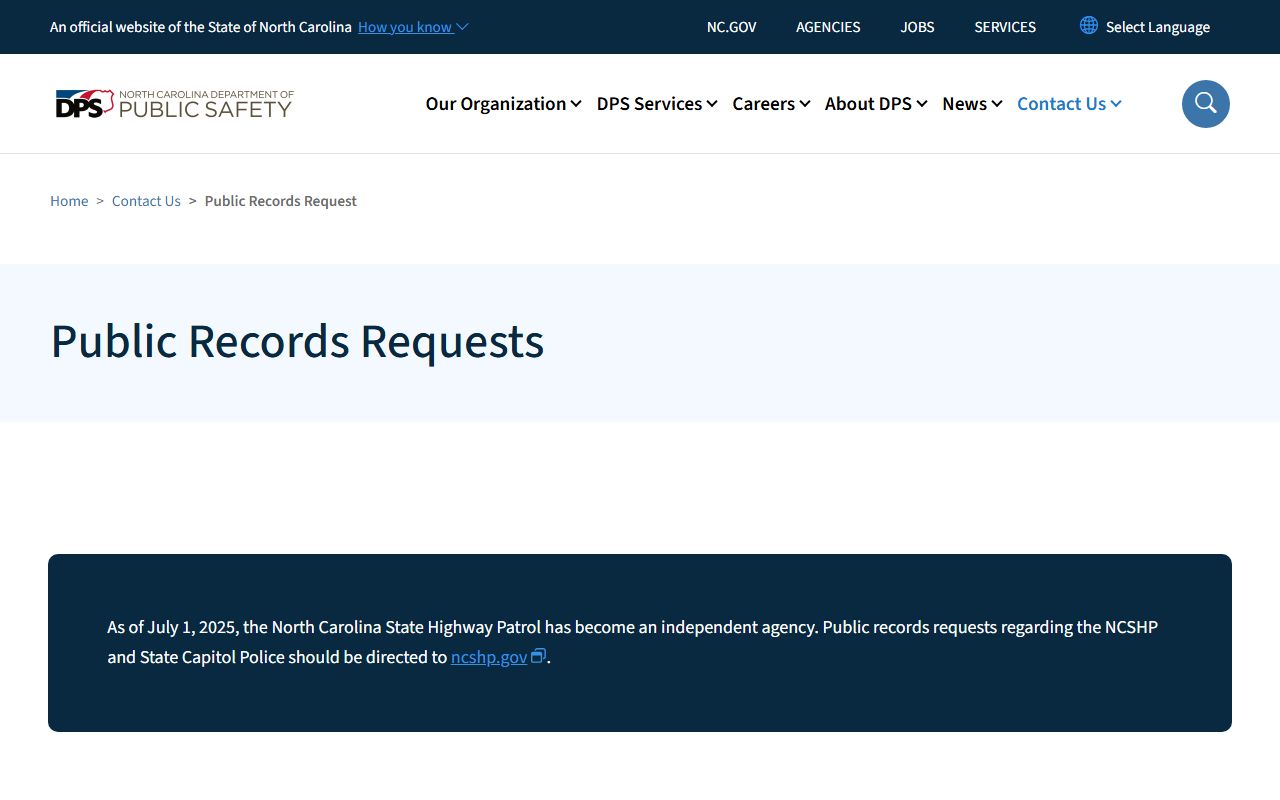
State agency requests do not turn a pending Anson County charge into a conviction, so the court disposition still controls the meaning.
Restricted Anson County Charge Records
Public access to Anson County charge records is broad, but not unlimited. North Carolina law treats juvenile records differently from adult criminal files. Sealed and expunged matters are not ordinary public court records. Some victim details, protected addresses, mental health proceedings, confidential special proceedings, and documents under redaction rules may be hidden from public Portal access or public terminal review.
North Carolina expunction statutes, including G.S. 15A-145 and 15A-146, may apply to certain dismissed charges, not-guilty outcomes, and other eligible cases. The process is not automatic for every arrest. A person usually identifies the case, uses official Judicial Branch forms, files in the county where the charge occurred, and waits for required court and agency processing.
Important: Do not use arrest records or pending charges for FCRA-regulated screening without a lawful consumer-reporting process.
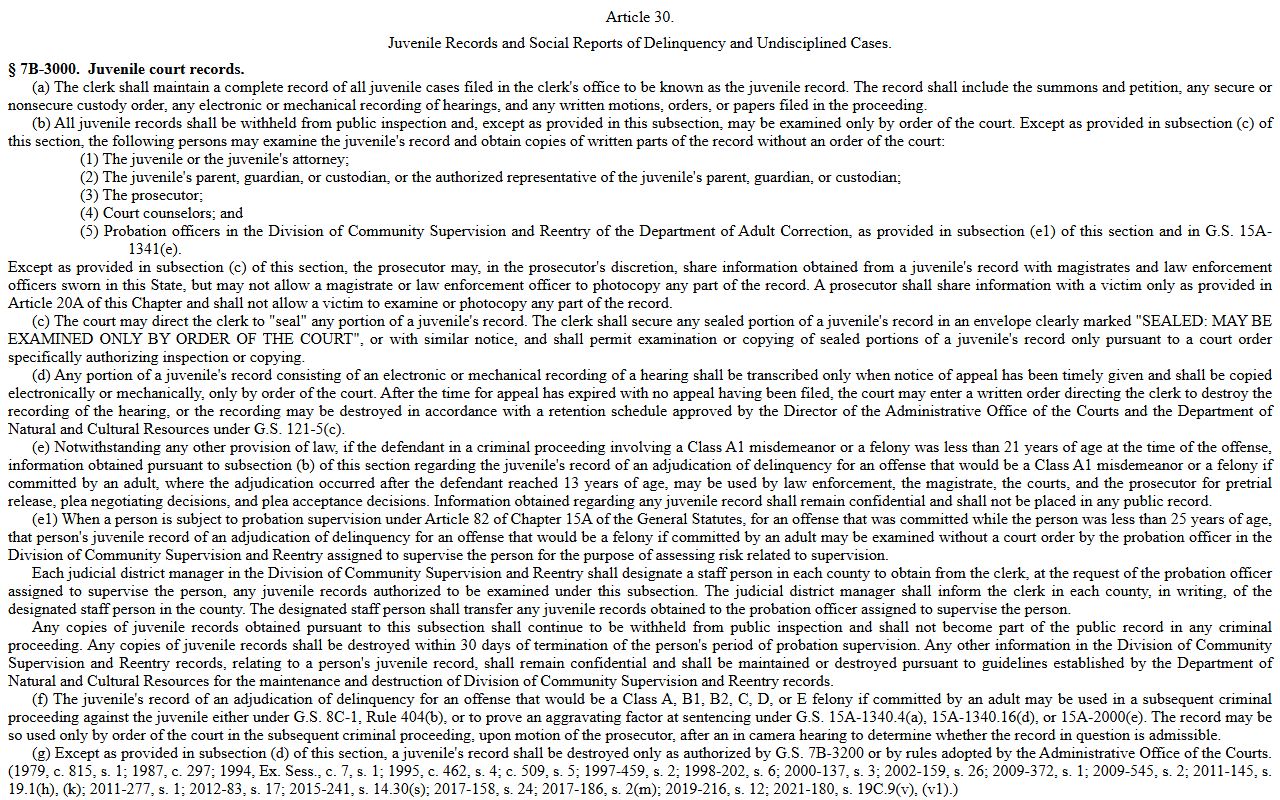
The juvenile records confidentiality statute is one reason some Anson County charge information will not appear in public search results.
When a result is missing from a public search, the reason may be a legal restriction rather than an absence of court activity.